To compare corporate gift quotes fairly, give every supplier one controlled requirement sheet, normalize each response against the same specifications, and separate confirmed scope from options, estimates and exclusions. Compare the complete project—not only the unit price—including logo work, packaging, samples, assembly, freight basis, approval steps and delivery assumptions.
A corporate gift quotation can look simple while covering several different deliverables. One supplier may include a decorated tumbler, notebook, pen, rigid box, insert card and assembly. Another may quote visually similar products but exclude the box, logo setup, packing or freight. The totals are not comparable until procurement makes the scope visible.
This guide fills the step between the corporate gift RFQ checklist and the purchase order checklist. It helps a buyer turn supplier responses into a controlled comparison before approving a product direction.
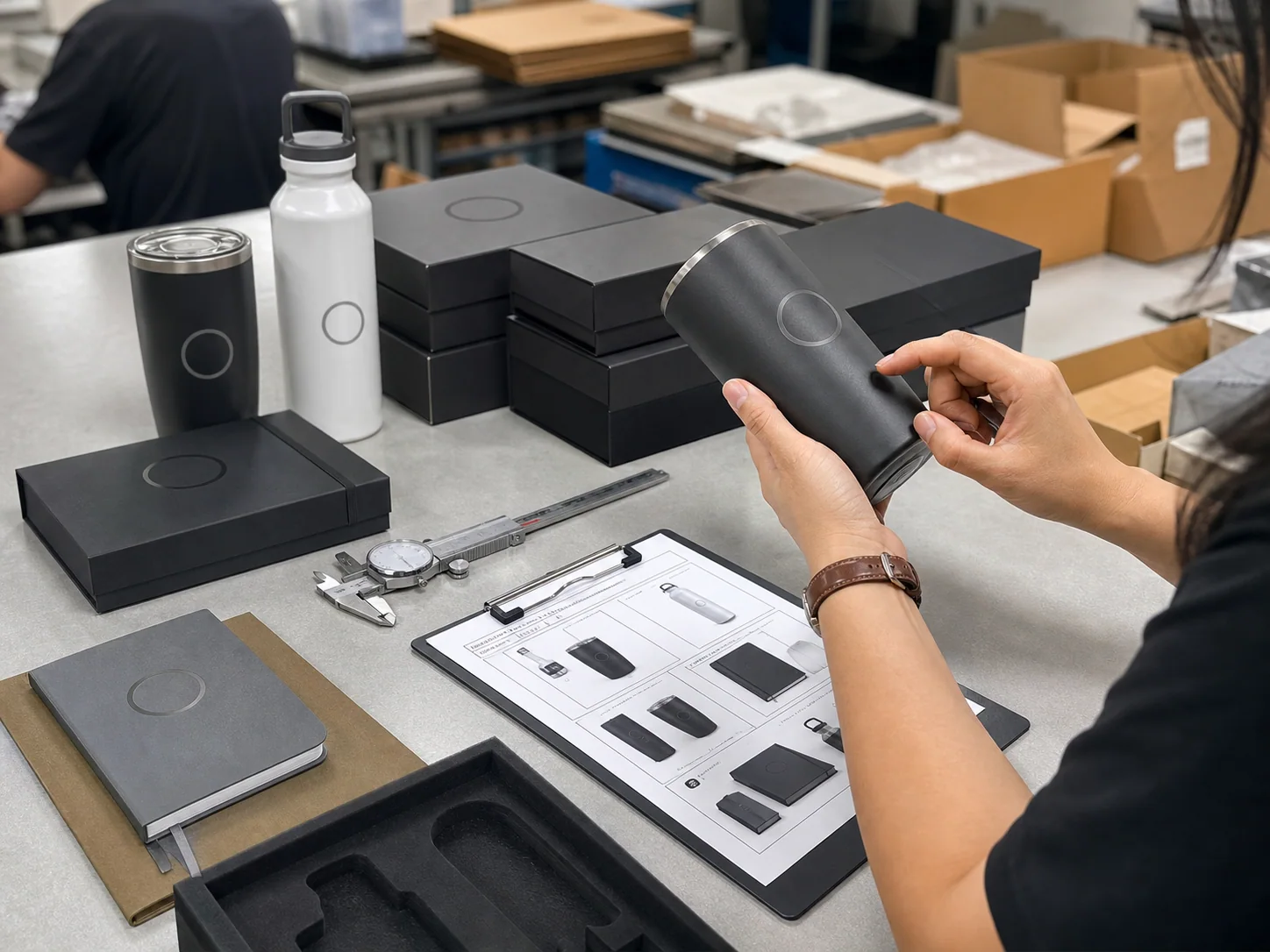
1. Build One Baseline Before Comparing Prices
Start with the requirements that every acceptable option must meet. Use one item list, quantity, audience, destination and requested delivery window. Mark which details are mandatory and which may change if a supplier proposes a practical alternative.
- Product category, reference and required function
- Quantity for each item or gift-set tier
- Material, size, color and included accessories where relevant
- Logo method, number of positions and artwork assumptions
- Packaging components and assembly requirement
- Sample path, destination and requested delivery window
If a supplier changes a required detail, record the alternative in a separate column. Do not silently treat a smaller product, different material or simpler package as equivalent.
2. Normalize Product Specifications
Product names alone are not enough. Compare the specification that affects use, appearance, packing and decoration. For a gift set, give each component its own row so a strong item does not hide a weak or missing one.
Reference photos are useful for orientation, but the comparison should also contain written specifications. If a detail is unknown, mark it as pending rather than filling the gap with an assumption.
3. Separate Logo and Artwork Scope
Ask how every item will be branded. A quote may include one print position while the project requires logos on several products and the box. Record the decoration method, location, logo size basis, number of colors and whether artwork setup or a visual mockup is included.
- Branding method for each product material
- Number of logo positions and colors included
- Artwork setup, proof or mockup scope
- Any separate tooling, plate or setup line
- Approval required before sampling or production
The corporate gift logo methods guide can help teams compare printing, engraving, debossing and other decoration directions without assuming that one method fits every surface.
4. Itemize Packaging, Cards and Assembly
A quote for products is not automatically a quote for a finished gift set. Confirm whether the price includes the gift box or mailer, internal insert, sleeve, tissue, sticker, message card, paper bag, individual protection and final assembly.
Ask whether packaging artwork, a layout proof and a packaging sample follow the same approval path as the products. If the box structure is still under development, keep its estimate separate from the confirmed product scope.
5. Compare the Sample and Approval Path
Two suppliers may propose different routes: a digital proof, an undecorated product sample, a decorated sample or a complete gift-set sample. Record what is included, which parts are reviewed physically, what remains digital, and what information is needed before approval can begin.
A sample line should not be judged only by cost. Procurement also needs to know which product, artwork and packaging decisions the sample will confirm. Use the sample approval process to define the review record before bulk production.
6. Put Freight and Delivery on the Same Basis
Compare freight only when suppliers use the same destination, postal code, quantity, shipment assumptions and shipping basis. A product-only quote and a delivered quote should occupy separate comparison columns.
- Destination and delivery point used for the estimate
- Shipping basis and costs included or excluded
- Estimated or confirmed carton quantity, size and weight
- Single bulk delivery or split-shipment requirement
- Freight estimate validity and details still pending
Packaging choices can affect shipment volume, so an early freight figure may need revision after the product mix and box size are confirmed. Keep that status visible instead of combining a provisional amount with confirmed product costs.
7. Compare Timing by Milestone
Do not compare one total number called “lead time” if the starting points differ. Break the schedule into artwork review, sample preparation, buyer approval, production, inspection, packing and transit. State which milestone begins after payment, artwork confirmation, sample approval or another agreed trigger.
Mark dates as requested, estimated or confirmed. This prevents an early planning estimate from being copied into the purchase order as a fixed promise without review.
8. Separate Confirmed Costs, Options and Exclusions
Place mandatory scope in the main total. Keep optional upgrades, alternative products and provisional costs in separate columns. Record currency, quantity basis, quotation revision, payment basis and any information the supplier still needs to confirm the quote.
A useful comparison makes omissions easy to see. “Not included,” “pending” and “not applicable” are different statuses and should not share an empty cell.
Corporate Gift Quote Comparison Table
| Comparison area | What to record | Decision check |
|---|---|---|
| Products | Reference, material, size, color, accessories and packing | Same specification or clearly labeled alternative? |
| Branding | Method, positions, colors, artwork and setup scope | Every required decorated surface included? |
| Packaging | Box, insert, card, sleeve, protection and assembly | Finished set or products only? |
| Samples | Digital proof, product sample, decoration and packaging scope | What decision will each sample confirm? |
| Freight | Destination, shipping basis, carton assumptions and status | Compared on the same delivery basis? |
| Timing | Approval, production, inspection, packing and transit milestones | Requested, estimated or confirmed? |
| Commercial | Currency, quantity, revision, included costs and options | Complete scope separated from estimates? |
Use a Compliance Gate Before a Price Score
First check whether each offer satisfies the mandatory requirements. A non-compliant option may still be useful, but it should be reviewed as an alternative rather than winning the comparison because its headline total is lower.
After the compliance check, procurement can compare the factors that matter to the project: specification fit, sample clarity, packaging scope, delivery plan, change control and total confirmed cost. The weighting should reflect the actual use case instead of applying one generic score to every gift project.
Final Review Before Supplier Selection
Once the preferred quotation is clear, transfer the final references and approved scope into the corporate gift purchase order checklist. This keeps the supplier-selection decision connected to the production record.
For a project-specific review, share the product direction, quantity, logo file, packaging needs and destination through the custom corporate gift quote page.